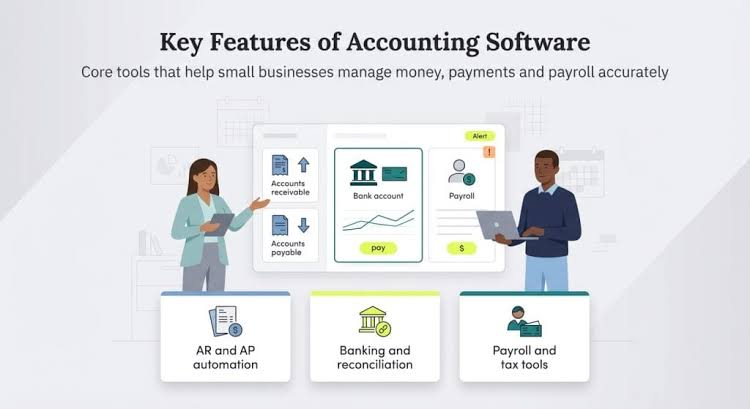

is one of the primary revenue sources for apartment communities. Accounting teams need accurate records of charges, payments, outstanding balances, and other tenant-related transactions.
Multifamily accounting software can help organize these records and connect them with property-level financial reporting.
Reliable receivables information allows management teams to monitor collection performance, investigate outstanding balances, and identify issues that may affect cash flow.
2. Accounts Payable Management
Apartment communities depend on vendors and service providers for maintenance, repairs, landscaping, cleaning, utilities, and other operating requirements.
Accounts payable functionality helps teams record invoices, assign expenses to the appropriate properties, manage approvals, and track payment status.
A structured process can reduce duplicate entries and improve the visibility of upcoming financial obligations.
3. Expense Tracking and Budgeting
Operating expenses have a significant impact on multifamily property performance. Costs associated with maintenance, insurance, utilities, staffing, and property services can vary throughout the year.
Accounting software helps property operators compare actual expenses with approved budgets. These comparisons can reveal unexpected cost increases and provide a basis for reviewing spending decisions.
Budgeting tools are most effective when property managers update forecasts regularly and investigate significant variances rather than relying solely on historical figures.
4. General Ledger and Bank Reconciliation
A well-maintained general ledger provides the foundation for accurate financial statements. Bank reconciliation helps accounting teams compare recorded transactions with bank activity and identify discrepancies.
Multifamily accounting software can organize these processes and establish more consistent accounting procedures across properties.
Organizations should still maintain appropriate review controls and investigate unresolved differences before closing their books.
5. Portfolio-Level Reporting
Owners of multiple apartment communities need a clear picture of performance across their portfolios.
Multifamily accounting software can help consolidate relevant financial information, allowing management teams to compare revenue, operating expenses, budgets, and other performance indicators.
Consistent reporting structures make it easier to evaluate individual assets and identify broader trends across a portfolio.
Benefits of Using Specialized Multifamily Accounting Software
Improved Financial Visibility
Centralized financial records help property owners and managers understand where revenue comes from and how expenses are distributed. This visibility supports more informed operational decisions.
More Consistent Accounting Processes
Standardized account structures, approval workflows, and reporting procedures can improve consistency across apartment communities.
Reduced Manual Work
Integrating accounting with property management processes can reduce repetitive data entry and the need to combine information from multiple spreadsheets. The level of automation depends on the software configuration and connected systems.
Better Budget Control
Comparing actual results with budgeted amounts helps managers identify overspending and review changes in operating costs.
Stronger Support for Investor Communication
Property owners frequently need to provide financial updates to investors and stakeholders. Reliable accounting records make it easier to prepare consistent reports and explain property performance.
Choosing the Right Multifamily Accounting Solution
Not every accounting platform is appropriate for every apartment operator. A small owner-managed property may have different requirements from an organization managing thousands of units across multiple markets.
When comparing solutions, consider the following factors.
Portfolio size and complexity: Determine whether the software can accommodate the number of properties, legal entities, and transactions your organization manages.
Integration capabilities: Evaluate how the system connects with property management, banking, budgeting, and reporting tools.
Reporting flexibility: Confirm that the software supports the financial statements, property comparisons, and investor reports your stakeholders require.
Internal controls: Review user permissions, invoice approval procedures, audit trails, and reconciliation workflows.
Scalability: Consider whether the system can accommodate future acquisitions, additional properties, and more complex reporting needs.
Implementation and support: Evaluate training, data migration, ongoing maintenance, and the availability of technical assistance.
Solutions such as Yardi Voyager may be worth evaluating for organizations seeking an integrated real estate management and accounting environment. The best choice depends on business requirements, product configuration, budget, and implementation capacity.
Key Financial Metrics to Monitor
Multifamily operators should use accounting information to evaluate more than total revenue and expenses.
Useful indicators include:
- Occupancy rate: The proportion of available units that are occupied.
- Rental income: Revenue generated from apartment rentals and related charges.
- Operating expenses: Costs associated with running and maintaining properties.
- Net operating income (NOI): Property operating income minus operating expenses, generally excluding debt service and capital expenditures.
- Budget variance: The difference between actual financial results and budgeted amounts.
- Accounts receivable aging: The distribution of outstanding balances by how long they have remained unpaid.
These metrics provide different perspectives on financial performance. They should be interpreted alongside occupancy trends, market conditions, capital requirements, and property-specific circumstances.
Best Practices for Multifamily Accounting
Successful accounting depends on sound procedures as well as appropriate software.
Property operators should establish consistent account categories, reconcile bank accounts regularly, review invoices before approval, and maintain clear documentation for significant transactions.
Monthly financial close procedures should include reviewing account balances, investigating unusual expenses, and comparing actual performance with budgets.
Management should also establish reporting deadlines and assign responsibility for reviewing financial results. These practices help ensure that accounting data remains useful for both operational management and investment oversight.
Conclusion
Multifamily accounting software plays an important role in managing the financial complexity of apartment communities. By organizing rental income, expenses, vendor payments, budgets, and financial reports, these systems help property operators improve visibility and establish more consistent accounting workflows.
The right solution should match the size and complexity of the portfolio while supporting accurate reporting and effective internal controls. With appropriate software and disciplined financial procedures, multifamily organizations can make better-informed decisions and manage their properties more efficiently.
Frequently Asked Questions
What is the purpose of multifamily accounting software?
It helps apartment owners and operators manage rental income, expenses, accounts payable, reconciliations, budgets, and property-level financial reporting.
How does multifamily accounting software help property managers?
It organizes financial records, supports expense tracking, and provides information that property managers can use to monitor budgets and operating performance.
Can multifamily accounting software support multiple properties?
Many specialized platforms support multi-property reporting and accounting structures. The available functionality depends on the selected system and configuration.
Why is accounting software important for apartment investors?
Accurate accounting information helps investors evaluate property performance, understand expenses, monitor cash flow, and review financial reports.