
Introduction:
In the vast world of global finance, the USD Index stands as a unique and critical indicator that commands attention and scrutiny from economists, investors, and policymakers alike. As a weighted measure of the United States dollar against a basket of other major currencies, the USD Index serves as a compass, guiding market participants through the turbulent waters of international trade and finance. In this article, we will delve deep into the significance of the USD Index, its calculation methodology, its historical relevance, and its impact on the global economy.
Understanding The USD Index:
The USD Index, also known as the U.S. Dollar Index or DXY, is a widely recognized benchmark that tracks the performance of the U.S. dollar against six major currencies: the euro (EUR), the Japanese yen (JPY), the British pound sterling (GBP), the Canadian dollar (CAD), the Swedish krona (SEK), and the Swiss franc (CHF). These currencies were selected based on their significance in international trade and financial markets.
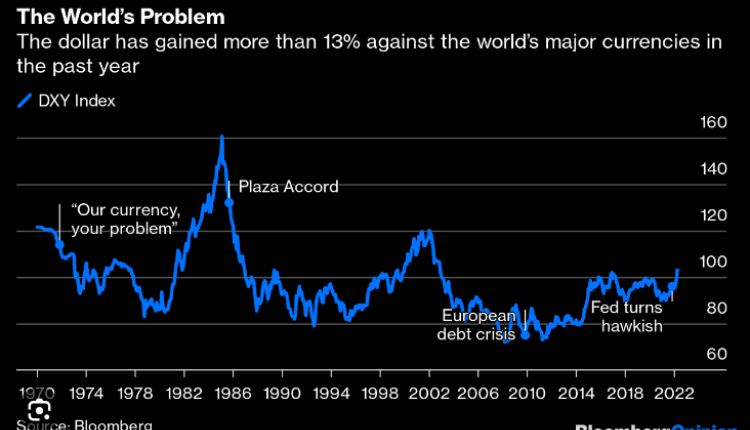
The index was first introduced in 1973 with a base value of 100. It is calculated using a geometric mean formula that compares the dollar’s value against the currencies in the basket, assigning weightings to each based on their importance in U.S. trade. As a result, the USD Index provides a comprehensive snapshot of the U.S. dollar’s strength or weakness relative to its major trading partners.
The Role Of The USD Index In The Global Economy:
The USD Index plays a crucial role in the global economy. It serves as a yardstick for assessing the overall health of the U.S. dollar, which is the world’s primary reserve currency. As such, fluctuations in the index can have far-reaching implications for international trade, investment flows, and monetary policies across the globe.
A strong USD Index indicates a relatively robust U.S. dollar, which can make U.S. exports more expensive for foreign buyers, potentially impacting American businesses and economic growth. Conversely, a weak USD Index can stimulate U.S. exports, as foreign goods become more expensive for American consumers, boosting the domestic economy.
Moreover, the USD Index influences central banks’ decisions on foreign exchange reserves allocation. Many countries hold significant portions of their reserves in U.S. dollars due to its status as a global safe-haven currency. Central banks closely monitor the USD Index to assess the value of their dollar-denominated assets and adjust their reserve strategies accordingly.
Historical Significance And Volatility:
Throughout history, the USD Index has experienced periods of extreme volatility and notable trends. Major global events, such as economic crises, geopolitical tensions, and shifts in monetary policies, have driven significant fluctuations in the index.
For example, during the 2008 global financial crisis, investors sought refuge in the U.S. dollar, causing a sharp rise in the USD Index as a flight to safety. Similarly, in times of geopolitical uncertainty, the dollar often strengthens as it is perceived as a safe haven asset.
Controversies And Criticisms:
While the USD Index is widely followed and respected, it has not been without controversy. Critics argue that the index’s weighting methodology may not accurately represent the economic ties and trading relationships between the United States and other countries. Some believe that the inclusion of certain currencies might over or underrepresent their influence on the U.S. economy.
Furthermore, the dominance of the USD Index as a global benchmark has raised concerns about the dollar’s “exorbitant privilege.” The U.S. dollar’s status as the world’s primary reserve currency grants the United States significant advantages but also imposes responsibilities in maintaining global economic stability.
Conclusion:
The USD Index stands as a key indicator in the ever-evolving landscape of global finance. Its significance lies not only in its ability to assess the U.S. dollar’s strength but also in its impact on international trade, investment, and monetary policies. As the global economy continues to face challenges and opportunities, understanding the USD Index remains crucial for navigating the complexities of the interconnected financial world.
FAQs:
- What factors can influence the USD Index?
The USD Index can be influenced by a myriad of factors, including changes in interest rates, economic data releases, geopolitical events, and shifts in global market sentiment. Additionally, central bank policies, trade balances, and inflation levels can significantly impact the dollar’s value against other currencies.
- Can the USD Index predict global economic trends?
While the USD Index provides valuable insights into the dollar’s performance, it is important to remember that it is just one indicator. Economic trends are influenced by a multitude of factors, and relying solely on the USD Index may not be sufficient to predict the overall trajectory of the global economy. It is best used in conjunction with other economic indicators and analyses.