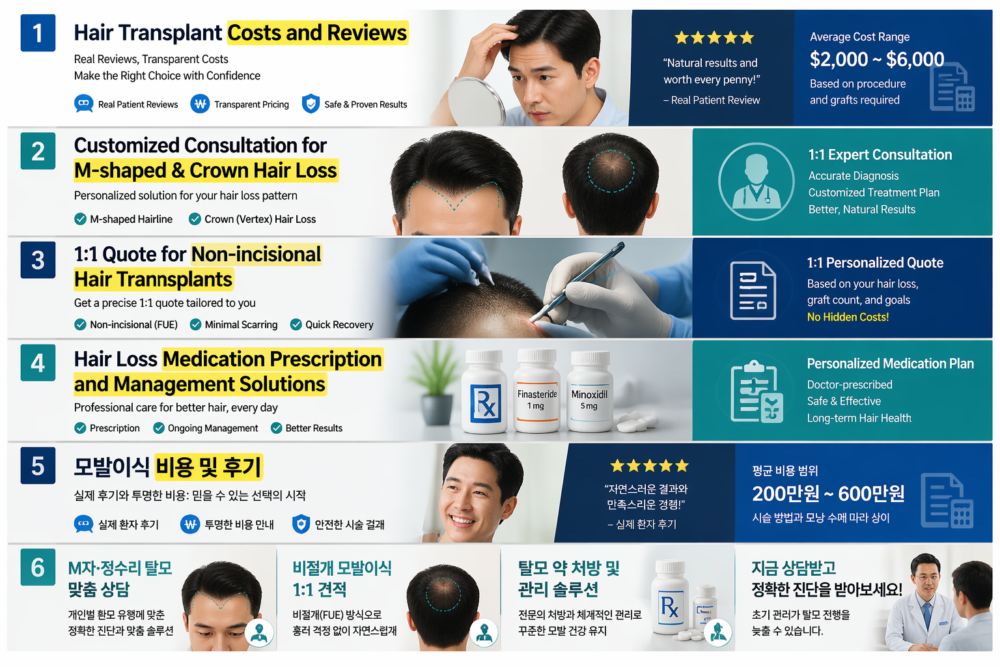

Hair loss can be a distressing experience for many people, and understanding the cause and solution for it is a crucial part of the journey toward regaining confidence and comfort. Among the various types of hair loss, M-shaped hair loss and crown hair loss are two of the most common and noticeable forms, especially for men. These types of hair loss can significantly affect one’s appearance and self-esteem. Thankfully, advancements in medical technology have brought about solutions that provide personalized treatments to tackle these issues head-on.
In this article, we will delve into the causes, effects, and most importantly, the solutions for M-shaped and crown hair loss or M자·정수리 탈모 맞춤 상담. We will also explore how customized consultations can be a game-changer in your hair restoration journey. We will discuss everything from hair transplant costs to medication prescriptions, along with non-invasive methods that offer promising results for your specific hair loss type. By the end of this article, you will be equipped with knowledge about the best available options to regain your hair, and ultimately, your confidence.
Understanding M-shaped & Crown Hair Loss
Before diving into the solutions, it’s essential to understand what M-shaped and crown hair loss are and how they manifest. M-shaped hair loss, often referred to as a receding hairline, begins at the temples and moves backward in the shape of the letter “M.” This pattern is typically one of the earliest signs of male pattern baldness and can affect both men and women, though it is more common in men due to genetics and hormonal changes.
Crown hair loss, on the other hand, occurs at the crown of the head and gradually spreads outward. This form of hair loss can start as a small bald patch at the crown, which then expands over time. Both M-shaped and crown hair loss can create a significant cosmetic concern, and in some cases, they can merge, leading to a more noticeable pattern of thinning or balding across the scalp.
The causes of these conditions can be varied, ranging from genetic predisposition (male pattern baldness) to lifestyle factors such as stress, poor nutrition, and environmental influences. Hormonal imbalances, particularly the effect of dihydrotestosterone (DHT), also play a significant role in hair thinning in both M-shaped and crown areas.
How Customized Consultation Can Help
If you are struggling with M-shaped or crown hair loss, seeking a customized consultation is a crucial first step. Personalized consultations provide a thorough assessment of your hair loss condition, helping experts determine the exact cause of your hair thinning. Instead of opting for a one-size-fits-all solution, a customized consultation ensures that the treatment plan is tailored specifically to your needs.
During the consultation, a trained professional will evaluate factors such as your family history, the extent of your hair loss, your scalp’s health, and your general health. By understanding these factors, they can recommend the best course of action for addressing your hair loss concerns. Whether it’s a hair transplant, medication, or other therapies, a personalized consultation can help you make an informed decision.
Furthermore, consultations for M-shaped and crown hair loss often focus on developing a treatment plan that addresses the particular challenges posed by these specific areas. For example, hair transplants for a receding hairline or crown baldness require precision and expertise to ensure that the results look natural and blend seamlessly with your existing hair.
Hair Transplant Costs and Reviews: What to Expect
Hair transplants are one of the most popular and effective treatments for hair loss, particularly for M-shaped and crown hair thinning. However, the cost of a hair transplant can vary widely depending on several factors, including the technique used, the clinic’s location, and the extent of the hair loss.
For those considering hair transplants for M-shaped or crown hair loss, understanding the cost is an important part of the decision-making process. On average, hair transplant costs can range from $4,000 to $15,000 or more. However, the price can fluctuate based on the number of grafts needed and the type of procedure you choose.
There are two main types of hair transplant methods: the follicular unit extraction (FUE) method and the follicular unit transplantation (FUT) method. FUE is generally more expensive due to its minimally invasive nature and the advanced technology required for the procedure. FUT, while a more traditional method, tends to be less costly but may leave a linear scar at the donor site.
It’s important to read reviews and testimonials from previous patients before choosing a clinic or treatment plan. A reputable clinic will have numerous positive reviews that can give you confidence in their ability to deliver excellent results. For example, many patients report significant improvements in the appearance of their M-shaped and crown hairlines after a successful hair transplant procedure. These reviews can offer valuable insights into the patient experience, the professionalism of the medical team, and the overall satisfaction with the results.
Additionally, online platforms such as https://www.hair.optislab.io/ provide helpful information and consultations for prospective patients, allowing them to access personalized care and get estimates tailored to their needs. Websites like these also offer reviews and success stories that can help you better understand the effectiveness of different treatment options.
Non-Incisional Hair Transplants: A Game Changer for Hair Restoration
Non-incisional hair transplants are an increasingly popular method for addressing hair loss, particularly for M-shaped and crown hair loss. Unlike traditional methods, which require incisions and sutures, non-incisional hair transplants are minimally invasive. The procedure involves the extraction of hair follicles from the donor area and the implantation of these follicles into the thinning or balding areas without making large cuts or leaving visible scars.
One of the main advantages of non-incisional hair transplants is the faster recovery time. Since there are no cuts or sutures involved, patients experience less pain and a quicker healing process. This makes it an attractive option for people who want to avoid the lengthy recovery period associated with traditional hair transplant methods.
The cost of non-incisional hair transplants can vary, but generally, they tend to be more affordable than incisional methods due to the lower complexity of the procedure. Many clinics offer 1:1 quotes for non-incisional hair transplants, which are based on your individual needs and the number of grafts required. This personalized approach ensures that you receive a quote that accurately reflects your situation.
Hair Loss Medication Prescription and Management Solutions
In addition to hair transplants, hair loss medication can play a crucial role in slowing down or reversing hair thinning. For those dealing with M-shaped or crown hair loss, a combination of treatments may be recommended to address the condition more effectively. Medications such as finasteride (Propecia) and minoxidil (Rogaine) are commonly prescribed to help manage hair loss.
Finasteride works by inhibiting the production of DHT, the hormone responsible for hair follicle shrinkage and hair loss. By reducing DHT levels, finasteride can help slow the progression of male pattern baldness and promote hair regrowth. Minoxidil, on the other hand, is a topical solution that stimulates hair growth by improving blood flow to the hair follicles. Both of these medications have been shown to be effective in treating hair loss, particularly in the early stages.
It is essential to consult with a healthcare provider to determine the most appropriate medication for your hair loss condition. A customized consultation can help ensure that the prescribed treatment is suitable for your specific needs. Managing hair loss through medication often requires ongoing treatment, so it’s important to understand the long-term commitment involved in medication use.
Conclusion: A Path to Confidence and Restoration
Hair loss, particularly M-shaped and crown hair loss, can be a frustrating and emotional experience. However, with the right knowledge, solutions, and a customized consultation, you can regain your confidence and restore your hair. From non-incisional hair transplants or 비절개 모발이식 1:1 견적 to medication prescriptions, there are numerous options available to help you address your hair loss concerns.
A personalized consultation is the first step in determining the best course of action for your specific needs. By consulting with experts and utilizing advanced treatments, you can take control of your hair restoration journey and achieve the results you desire. Be sure to research hair transplant costs, read reviews, and ask for 1:1 quotes to ensure that you receive the best care possible. With the right approach, your journey to regaining your hair and confidence is closer than you think.