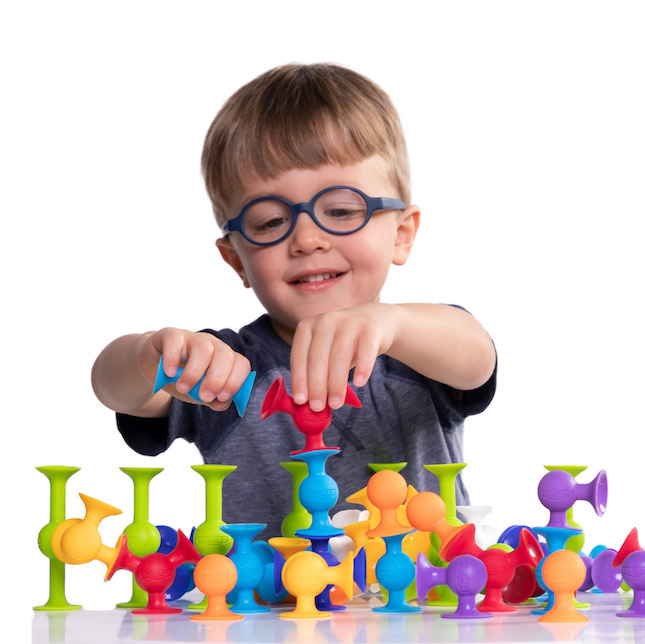

Toys are an important part of childhood because they provide opportunities for exploration, imagination, movement, and social interaction. While children often choose toys because they are enjoyable, many play activities can also support learning and the development of practical skills.
Educational toys are designed to encourage particular types of exploration, such as counting, building, problem-solving, language development, or creative expression. However, children do not always need specialized products to learn through play. Simple everyday objects and open-ended activities can also provide valuable experiences when used safely. If you are searching for lego store Pittsburg visit The Brick Pitt.
What Are Educational Toys?
Educational toys are play materials intended to encourage learning through hands-on activities.
Some toys introduce specific concepts, such as letters, numbers, shapes, or colors. Others encourage children to experiment, build, create, or solve problems.
Common examples include:
-
Building blocks and construction sets.
-
Puzzles and matching games.
-
Pretend-play kitchens and tool sets.
-
Art supplies and craft materials.
-
Counting and sorting toys.
-
Musical instruments designed for children.
-
Science and discovery kits.
-
Board games and memory games.
The educational value of a toy depends on how it is used, the child’s developmental stage, and whether the activity matches the child’s interests.
How Toys Encourage Creativity
Creative play allows children to imagine possibilities and develop their own ideas.
Building blocks, art materials, dolls, and pretend-play sets can support activities that do not have a single correct outcome.
A child might use blocks to create a fictional city, turn cardboard boxes into a spaceship, or invent a story involving toy animals.
These activities provide opportunities to experiment with different approaches and express individual ideas.
Open-ended toys can be particularly useful because children can use them in many different ways as their interests develop.
Toys That Encourage Problem-Solving
Puzzles, construction toys, and age-appropriate strategy games can encourage children to think through challenges.
A child working on a puzzle may compare shapes, recognize patterns, and try different ways to fit pieces together.
Building toys can encourage experimentation with balance, structure, and spatial relationships.
When children encounter difficulties during play, adults can offer encouragement without immediately solving every problem for them.
This allows children to practice trying different approaches and learning from the results.
Supporting Language and Communication
Pretend play, storytelling toys, and interactive games can create opportunities for language development.
Children may describe what they are doing, invent characters, ask questions, or negotiate roles with other children.
Picture cards, storybooks, puppets, and pretend-play sets can provide prompts for conversation.
Adults can support language development by asking open-ended questions, listening to children’s ideas, and introducing new words naturally during play.
For example, when a child builds a bridge with blocks, an adult might ask what the bridge is for or how the child plans to make it stronger.
Encouraging Social Skills Through Play
Playing with others can provide opportunities to practice communication, cooperation, and taking turns.
Board games, building activities, pretend-play sets, and group games can encourage children to share materials and work toward a common goal.
Disagreements may also arise during play. With age-appropriate guidance, children can practice expressing preferences, listening to others, and finding solutions.
Not every activity needs to involve a group. Independent play can also provide children with opportunities to explore their interests and develop confidence in their own ideas.
Choosing Age-Appropriate Toys
The most suitable toy depends on a child’s age, abilities, interests, and individual needs.
Toy manufacturers often provide age recommendations based on intended use and safety considerations. These recommendations should be reviewed before purchasing.
For infants and toddlers, avoid toys with small detachable parts that could present choking hazards. Be particularly careful with small magnets, button batteries, long cords, and other hazardous components.
Older children may enjoy more complex construction sets, puzzles, and games, but the instructions and materials should still match their abilities.
Adults should supervise play when needed, especially when toys contain small parts, tools, chemicals, or other potential hazards.
Toy Safety and Quality
Safety should be a priority when choosing toys.
Inspect toys for sharp edges, loose components, broken parts, and damaged batteries or wiring. Follow manufacturer instructions for assembly, cleaning, and use.
For younger children, consider whether a toy can be cleaned easily and whether its materials are appropriate for the intended age group.
When purchasing toys, look for clear product information, age recommendations, and applicable safety certification or compliance information.
Avoid assuming that an attractive appearance or high price automatically means a toy is safe or educationally valuable.
Balancing Screen-Based and Hands-On Toys
Digital toys and interactive learning products can provide engaging experiences, but they are only one category of play.
Hands-on toys offer opportunities for physical manipulation, movement, construction, and face-to-face interaction.
Families can consider a balanced range of activities that includes creative play, outdoor movement, reading, and age-appropriate digital experiences.
The most useful approach depends on the child’s interests, family routines, and developmental needs.
How Parents Can Make Play More Meaningful
Parents and caregivers can support learning by creating opportunities for children to explore without making every activity feel like a lesson.
Provide a selection of toys that encourage different types of play, rotate materials when children lose interest, and allow time for independent exploration.
Joining a child’s play can also create opportunities for conversation and shared enjoyment.
Rather than focusing only on what a child produces, pay attention to the questions they ask, the ideas they explore, and the enjoyment they experience.
Conclusion
Toys can support childhood learning by encouraging creativity, problem-solving, communication, and social interaction.
Educational toys are most useful when they match a child’s developmental stage, interests, and abilities. Safe materials, appropriate supervision, and opportunities for open-ended play help children explore their world through enjoyable experiences.
By choosing a varied selection of toys and allowing children time to experiment, families can make play a meaningful part of everyday childhood.